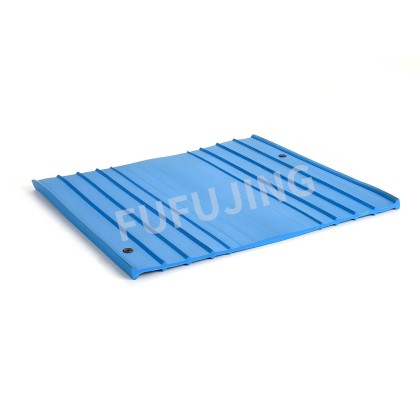
As urbanization accelerates globally, the demand for reliable waterproofing solutions has surged, with PVC Waterstops playing a pivotal role in safeguarding concrete structures against water ingress and structural stress. Manufacturers are now focusing on specialized designs to address diverse joint types, including Internal Expansion Joint, Internal Construction Joint, External Construction Joint, and External Expansion Joint PVC Waterstops.
Spotlight on Key PVC Waterstop Variants
Internal Expansion Joint PVC Waterstop
This variant is engineered to absorb dynamic movements in structures such as parking garages and subway systems. Leading supplier FUFUJING recently launched a 300mm-wide model with dual ribs and a hollow centerbulb, achieving a tensile strength of 18 MPa and elongation exceeding 400%. Its NSF-61 certification makes it ideal for potable water tanks and hydropower plants.
Internal Construction Joint PVC Waterstop
Used primarily in poured-in-place concrete segments, these waterstops feature serrated edges for enhanced bonding. Earth Shield® introduced a 200mm x 6mm profile with stainless steel inserts, capable of resisting pressures up to 15 meters. Its non-corrosive properties are critical for marine environments like port terminals.
External Construction Joint PVC Waterstop
Designed for above-ground joints in bridges and highways, these waterstops emphasize UV resistance. JP Specialties rolled out a 330mm-wide black PVC variant with a 75 Shore A hardness rating, tailored for regions with extreme temperature fluctuations. Pre-fabricated corners reduce installation time by 30%.
External Expansion Joint PVC Waterstop
For heavy industrial zones, the 250mm External Expansion Joint PVC Waterstop by fufujing group incorporates a triple-lobe design to handle multidirectional shifts. Its chemical resistance to oils and alkalis meets ASTM D412 standards, making it a go-to choice for chemical plants and fuel storage facilities.
Market Trends and Innovations
Smart Manufacturing: AI-driven extrusion lines now produce waterstops with ±0.5mm precision, minimizing material waste.
Green Certifications: Bio-based plasticizers are replacing phthalates in PVC formulations, aligning with EU REACH regulations.
Regional Growth: Southeast Asia’s infrastructure boom is driving a 12% annual demand increase, with Thailand and Vietnam leading imports.
Challenges and Best Practices
Despite advancements, improper joint preparation remains a key failure point. Experts recommend:
Using primer solutions to improve PVC-concrete adhesion.
Implementing 3D BIM modeling to pre-plan waterstop layouts in complex projects.