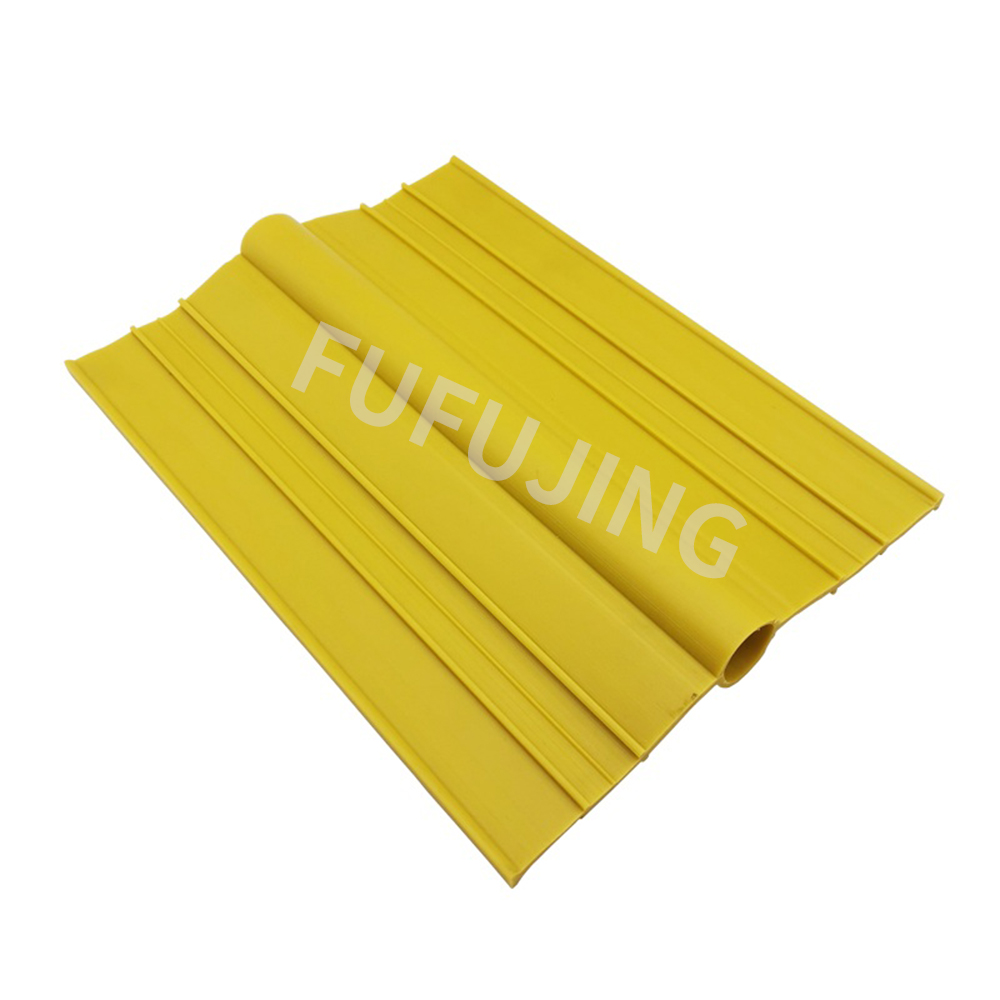
The "hot air aging coefficient" of a waterstop is a critical indicator of its ability to retain key mechanical properties (e.g., tensile strength, elongation at break) after prolonged exposure to elevated temperatures, which directly correlates with its durability in real-world applications. Here’s the relationship and its implications:
Material Degradation Resistance
The hot air aging coefficient quantifies how well a material resists oxidative degradation under heat. For PVC waterstops, this is measured by exposing samples to controlled high-temperature environments (e.g., 70°C for 240 hours) and comparing pre- and post-aging tensile strength and elongation. A higher coefficient (e.g., ≥95% per GB/T 18173.2-2000 standards) indicates minimal degradation, ensuring the waterstop maintains flexibility and structural integrity over time.
Long-Term Stability
PVC’s durability relies on additives like plasticizers and stabilizers, which mitigate thermal and oxidative damage. A high aging coefficient signifies effective stabilization, preventing chain scission or cross-linking that could lead to brittleness, cracking, or reduced elongation capacity. This is vital for joints subjected to thermal cycling or mechanical stress in environments like dams or tunnels.
Performance Retention
Aging coefficient values reflect the material’s ability to resist:
Hardening: Loss of plasticizers under heat accelerates rigidity, compromising sealing efficiency.
Cracking: Oxidative degradation weakens molecular bonds, increasing susceptibility to stress-induced fractures.
Chemical Attack: Poor aging resistance exacerbates vulnerability to corrosive agents (e.g., salts, alkalis) in water or soil.
Design Relevance
Standards such as ASTM D573 or ISO 188 mandate aging tests to validate service life. For instance, a PVC waterstop with a coefficient <95% may fail prematurely in high-temperature zones (e.g., solar-exposed structures), whereas a coefficient ≥95% ensures compliance with 25+ year service life requirements.
For applications demanding rigorous durability, specialized types like Internal Expansion Joint PVC Waterstop, Internal Construction Joint PVC Waterstop, External Construction Joint PVC Waterstop, and External Expansion Joint PVC Waterstop are engineered with optimized aging coefficients to address specific thermal and mechanical challenges in construction joints.