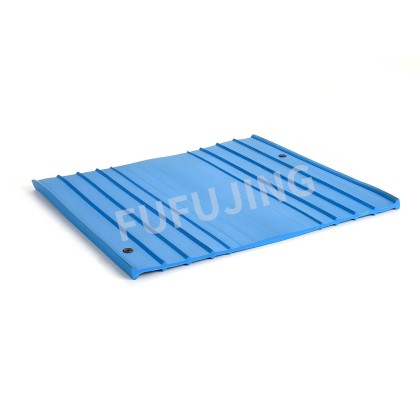
When choosing the right PVC waterstop for different building structures like high - rise buildings, bridges, and underground utility tunnels, we must consider different joint types, including Internal Expansion Joint PVC Waterstop, Internal Construction Joint PVC Waterstop, External Construction Joint PVC Waterstop, and External Expansion Joint PVC Waterstop. Here's how to choose:
High - rise buildings
- Internal Expansion Joint PVC Waterstop: In high - rise buildings, internal expansion joints can have large displacements due to temperature changes and structural settlement. We need a PVC waterstop that is very flexible and can handle large deformations. It should have a wider middle water - stop part, perhaps 400 - 600mm wide, and a structure that can easily adapt to horizontal and vertical expansions.
- Internal Construction Joint PVC Waterstop: Internal construction joints in high - rise buildings mainly need to prevent water ingress during construction and later use. Pick a PVC waterstop with a simple structure but that adheres well to concrete. A width of 300 - 400mm is usually sufficient, and it should stick well to concrete to stop water from seeping at the joint.
- External Construction Joint PVC Waterstop: External construction joints are outdoors and are affected by weather and water. So, select a PVC waterstop that can resist weather and corrosion. It may need a thicker surface layer, and a width of 350 - 450mm can offer better waterproofing and protection.
- External Expansion Joint PVC Waterstop: External expansion joints in high - rise buildings are affected by structural changes and a harsh outside environment. The PVC waterstop we choose should be able to handle deformations well and resist weather. The width is usually 500 - 800mm, and it may have special additives to resist UV and aging to keep functioning well for a long time.
Bridges
- Internal Expansion Joint PVC Waterstop: Bridges have large dynamic loads and temperature changes. So, the internal expansion joint PVC waterstop has to be very flexible and resist fatigue. It should be able to handle being stretched and compressed repeatedly due to vehicle loads and temperature changes. A waterstop with a width of 500 - 700mm and a complex internal structure to make it stronger is better.
- Internal Construction Joint PVC Waterstop: For internal construction joints in bridges, apart from keeping water out, the PVC waterstop also has to withstand concrete vibration when it is being poured. A waterstop with a width of 350 - 450mm and some stiffness to maintain its shape during construction is good.
- External Construction Joint PVC Waterstop: External construction joints in bridges are directly exposed to rain, sun, and other harmful elements in the air. Choose a PVC waterstop that can resist corrosion and erosion well. The surface may be treated with a special coating, and a width of 400 - 500mm can enhance the waterproofing and protection.
- External Expansion Joint PVC Waterstop: External expansion joints in bridges are very important for waterproofing and handling deformations. The PVC waterstop we pick should be able to handle large deformations and resist weather well. It is good to choose a waterstop with a width of 600 - 900mm and extra reinforcement to work well under the complex conditions of a bridge.
Underground utility tunnels
- Internal Expansion Joint PVC Waterstop: In underground utility tunnels, internal expansion joints have to adapt to the deformation from ground settlement and the expansion and contraction of pipelines. The PVC waterstop should be flexible and a bit compressible. A width of 400 - 600mm and a structure that can wrap around pipelines easily are needed.
- Internal Construction Joint PVC Waterstop: Internal construction joints in underground utility tunnels mainly need to stop water from seeping between different construction parts. Choose a PVC waterstop that seals well and is easy to install. A width of 300 - 400mm and a simple structure that can be installed quickly in the small space of the tunnel are good.
- External Construction Joint PVC Waterstop: External construction joints in underground utility tunnels are in contact with the soil and groundwater. So, they need to resist water and stop seepage well. The PVC waterstop should have a tight structure and be made thicker. A width of 350 - 450mm and a material that can withstand high water pressure are better.
- External Expansion Joint PVC Waterstop: External expansion joints in underground utility tunnels have to consider both waterproofing and adapting to large deformations of the tunnel structure. The PVC waterstop we choose should be able to handle large deformations and last a long time. A width of 500 - 800mm and a reinforced structure to resist soil and groundwater pressure are a good choice.