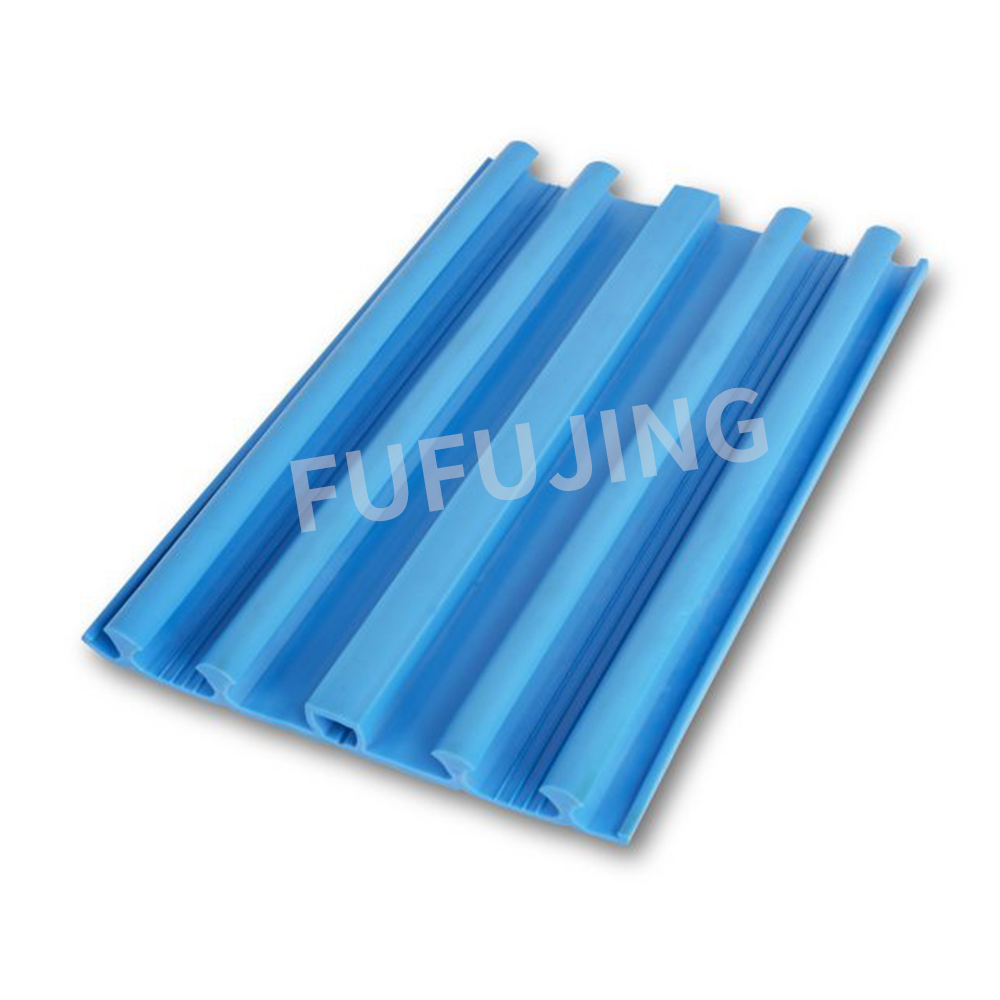
The type of plasticizer critically regulates the flexibility of PVC waterstops by modifying the polymer's molecular interactions and physical properties. Below is a detailed explanation of how different plasticizers influence flexibility, supported by technical insights:
1. Molecular Interactions and Chain Mobility
Plasticizers like phthalates (e.g., DINP, DIDP) or benzoate esters reduce intermolecular forces between PVC chains by inserting themselves into the polymer matrix. This disrupts dipole-dipole interactions, increases free volume, and allows molecular chains to slide freely, enhancing flexibility . Low-molecular-weight phthalates (e.g., DOP) provide rapid softening but may migrate over time, whereas high-molecular-weight alternatives like polymeric adipates or trimellitates offer superior permanence and long-term flexibility retention .
2. Thermal and Low-Temperature Adaptability
Specialized plasticizers such as epoxidized soybean oil (ESBO) or DOA (dioctyl adipate) lower the glass transition temperature of PVC, improving flexibility at low temperatures. ESBO also acts as a stabilizer, reacting with HCl released during thermal degradation to maintain flexibility under heat stress . For waterstops in cold climates, linear alkyl esters (e.g., DOA) are preferred to prevent brittleness .
3. Migration Resistance and Durability
Plasticizers with higher molecular weight (e.g., polymeric plasticizers) exhibit slower migration rates, ensuring sustained flexibility. For instance, Eastman™ 168 plasticizer demonstrates excellent resistance to extraction by water and alkalies, making it ideal for waterstops exposed to harsh environments . Additives like nanoparticles or organoclays can further immobilize plasticizers, reducing migration and embrittlement risks .
4. Chemical Tailoring for Specific Performance
Hydrolytic Stability: Phosphate esters enhance water resistance, suitable for submerged applications .
Non-Phthalate Alternatives: Bio-based plasticizers (e.g., citrate esters or Citrullus lanatus seed oil derivatives) balance flexibility with environmental safety, addressing regulatory concerns .
High-Pressure Resistance: Rubber-like flexibility in dynamic joints can be achieved using polyester-based plasticizers, which form stable hydrogen bonds with PVC .
5. Impact on Processing and Mechanical Properties
The compatibility of plasticizers with PVC dictates processing efficiency. For example, highly compatible plasticizers (e.g., Eastman™ 168) accelerate fusion during extrusion, ensuring uniform material distribution and consistent flexibility . However, excessive viscosity reduction from low-molecular-weight plasticizers may compromise mechanical strength, necessitating a balance between processability and end-use performance .
Relevant Waterstop Types
Internal Expansion Joint PVC Waterstop
Internal Construction Joint PVC Waterstop
External Construction Joint PVC Waterstop
External Expansion Joint PVC Waterstop