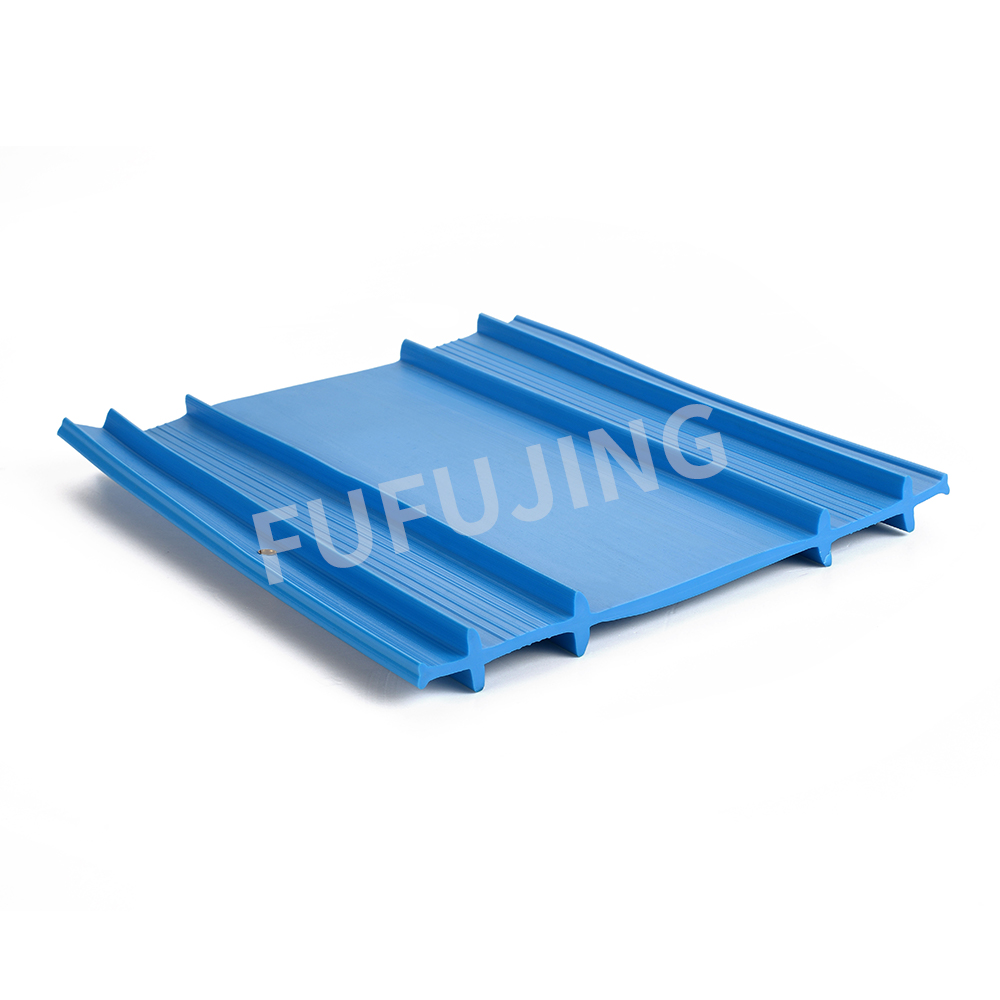
Choosing the appropriate PVC waterstop requires evaluating engineering parameters, environmental conditions, and material properties. Below is a structured selection framework:
1. Key Selection Criteria
a) Water Pressure Rating & Dimensions
Low Pressure (<4m water head): Width ≥200mm, thickness ≥5mm.
Medium Pressure (4–8m): Width ≥300mm, thickness ≥6mm (e.g., 300×8, 350×8).
High Pressure (>8m): Width ≥350mm, thickness ≥8mm (e.g., 350×10).
Principle: Larger dimensions extend the water seepage path, enhancing sealing performance.
b) Structural Movement Adaptation
Minor Deformation (≤10mm displacement): Standard type (e.g., B-Type).
Significant Deformation (>30mm): Use high-elasticity models (e.g., G-Type steel-reinforced) or switch to rubber waterstops.
c) Chemical Resistance & Durability
Corrosive Environments (chemical plants, sewage tanks): Opt for acid/alkali-resistant PVC formulations.
Outdoor Exposure: Verify UV resistance (post-thermal aging strength retention ≥83%).
2. Performance Standards & Testing
PVC waterstops must comply with national/international standards (e.g., GB18173.2, CNS 3895, ASTM D7176):
| Test Parameter | Minimum Requirement | Significance |
| Tensile Strength | ≥12 MPa | Resistance to structural cracking |
| Elongation at Break | ≥300% | Adaptability to deformation |
| Brittleness Temperature | ≤-30℃ | Cold resistance (critical for cold climates) |
| Post-aging Strength Retention | ≥83% | Long-term durability assurance |
3. Application-Specific Recommendations
| Project Type | Recommended Model | Rationale |
| Tunnels/Underground Works | 300×8 (B-Type) | Resists soil pressure & groundwater corrosion |
| Hydraulic Dams | 350×10 (G-Type) | High-pressure sealing; steel reinforcement prevents displacement |
| Wastewater Treatment Plants | Corrosion-resistant formula | Withstands acids/alkalis |
| Building Expansion Joints | Surface-mounted (S-Type) | Easy installation; seals exposed surfaces |
4. Common Pitfalls & Solutions
Mismatched Dimensions:
Risk: Using thin profiles (e.g., 300×4) in high-pressure scenarios → leakage.
Fix: Align thickness with water pressure (see Section 1a).
Inadequate Low-Temperature Performance:
Risk: Non-compliant products in cold regions (-25℃) → brittle failure.
Fix: Ensure brittleness temperature ≤-30℃ or use EPDM rubber.
Poor Joint Handling:
Risk: Overlap length <35cm or lack of heat welding → joint failure.
Fix: Overlap ≥35cm; seal with dedicated welding gun + soft filler rods.
5. Step-by-Step Selection Process
- Define Parameters: Measure water pressure, structural movement, temperature range.
- Select Dimensions: Match width/thickness to water pressure (Section 1a).
- Verify Performance: Confirm tensile strength, brittleness temperature, etc.
- Check Certifications: Ensure compliance with GB/CNS/ASTM standards.
- Special Cases: Use corrosion-resistant PVC for chemical exposure; switch to EPDM rubber for sub -30℃ environments.