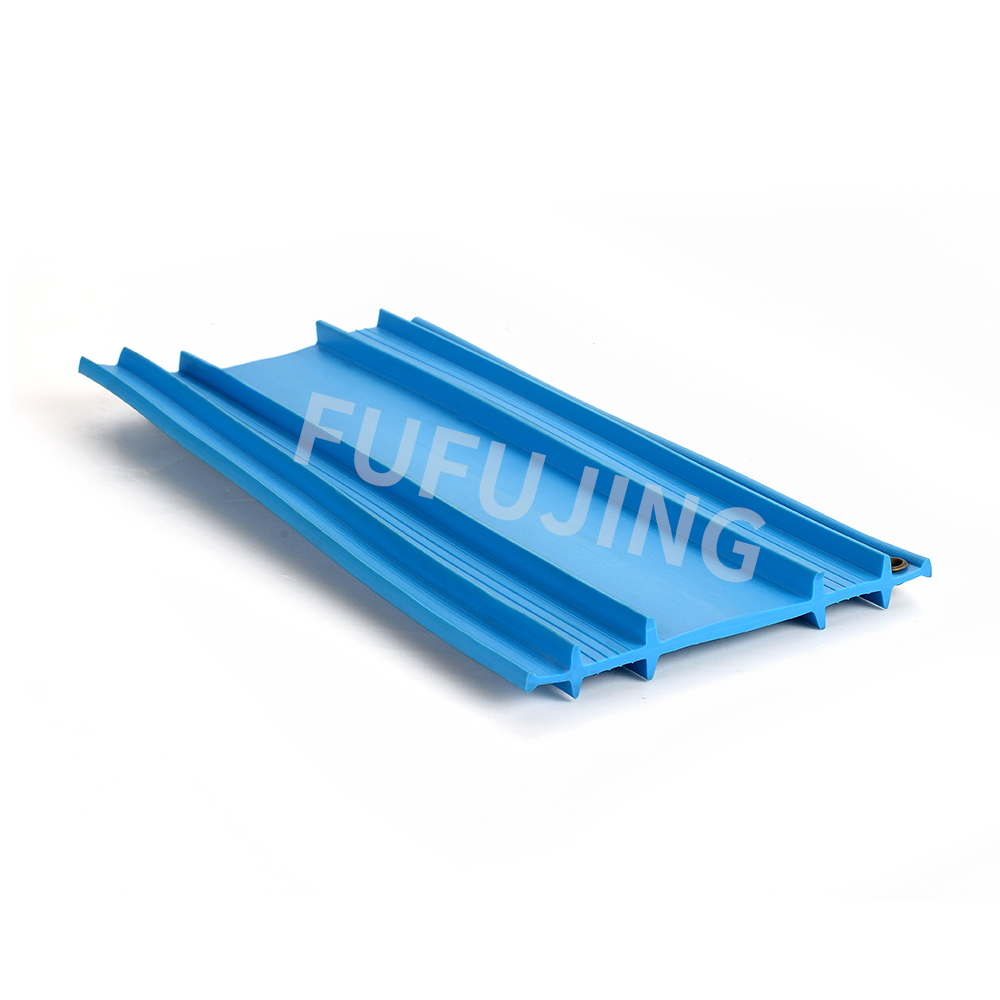
Proper maintenance of installed PVC waterstops is critical to ensure long-term waterproofing performance in concrete joints. Based on engineering standards (e.g., GB55030-2022, ASTM D7176) and manufacturer guidelines (e.g., Sika Greenstreak), follow these systematic practices:
---
1. Regular Inspection & Monitoring
- **Visual Checks** (Quarterly or post-extreme weather):
- Examine for **cracks, punctures, deformation**, or UV degradation (chalking/brittleness).
- Check concrete-waterstop interfaces for **debonding** using a probe (gap depth >2mm requires repair).
- **Seal Integrity Testing**:
- Conduct **hydrostatic pressure tests** (≥0.3 MPa) or dye-penetration tests at joints to detect leaks.
- Use infrared thermography for non-destructive leak mapping.
---
2. Cleaning & Protection
- **Debris Removal**:
- Gently brush off dirt/biological growth (e.g., algae) with **soft-bristle tools**; avoid metal scrapers to prevent abrasion.
- **Chemical Contaminants**:
- Rinse oil/acid spills immediately with **pH-neutral cleaners** (pH 6–8). Never use strong solvents.
- **Physical Protection**:
- Install **PVC protective covers** or rubber guards on exposed sections (e.g., tunnel joints) to prevent mechanical damage.
- Ensure drainage slopes prevent water pooling (>48-hour stagnation accelerates aging).
---
3. Damage Repair Techniques
- **Minor Damage (Cracks/Punctures)**:
① Cut a **V-groove** (≥45° angle) around the defect.
② Clean with **acetone** and dry thoroughly.
③ Fill with **homogeneous PVC welding rods** using a hot-air gun (200–250°C).
④ Compact, cool, and sand smooth.
- **Failed Joints or Splices**:
- Cut out ≥35 cm of the damaged section and re-splice via **dual-seam hot welding** (with air-channel testing for airtightness).
- **Concrete Interface Debonding**:
- Inject **epoxy resin** or **polyurethane sealant** to restore adhesion.
---
4. Environmental Adaptation
- **Temperature Stress**:
- **Cold Climates** (< -10°C): Cover with **insulating materials** (e.g., rubber foam) to prevent brittleness. Replace if frost damage occurs.
- **Hot Environments** (>60°C): Apply **reflective aluminum foil** to reduce heat absorption.
- **Chemical Exposure** (e.g., wastewater plants):
- Apply **fluorocarbon resin coatings** biannually to enhance corrosion resistance.
---
#### ? **5. Performance Testing & Documentation**
- **Biannual Third-Party Testing**:
- Verify compliance with **GB/T 18173.2** or **ASTM D7176** standards:
| **Test Parameter** | **Requirement** |
|--------------------------|--------------------------|
| Tensile Strength | ≥12 MPa |
| Elongation at Break | ≥300% |
| Brittleness Temperature | ≤ -30°C |
- **Maintenance Logs**:
- Record inspection dates, findings, repairs, and test reports to track lifecycle performance.
---
#### ⚠️ **Critical Pitfalls to Avoid**
- **Ignoring UV Exposure**: Unprotected waterstops lose plasticity; use covers or UV-stabilized PVC.
- **Improper Repairs**: Non-homogeneous patches (e.g., generic sealants) cause delamination.
- **Overlooking Joint Movements**: In movement joints, verify the center bulb/tear web remains functional; replace if rigid.
---
### ✅ **Summary: Best Practices**
1. **Inspect** quarterly and after extreme events.
2. **Clean** gently and protect from UV/chemicals.
3. **Repair** with certified PVC welding rods and sealants.
4. **Test** every 2 years against ASTM/GB standards.
5. **Document** all maintenance actions.
**Pro Tip**: For critical structures (dams, tunnels), use **factory-fabricated intersections** to minimize field-splicing errors. Adhering to these protocols extends service life to **>20 years** while preventing costly leaks.