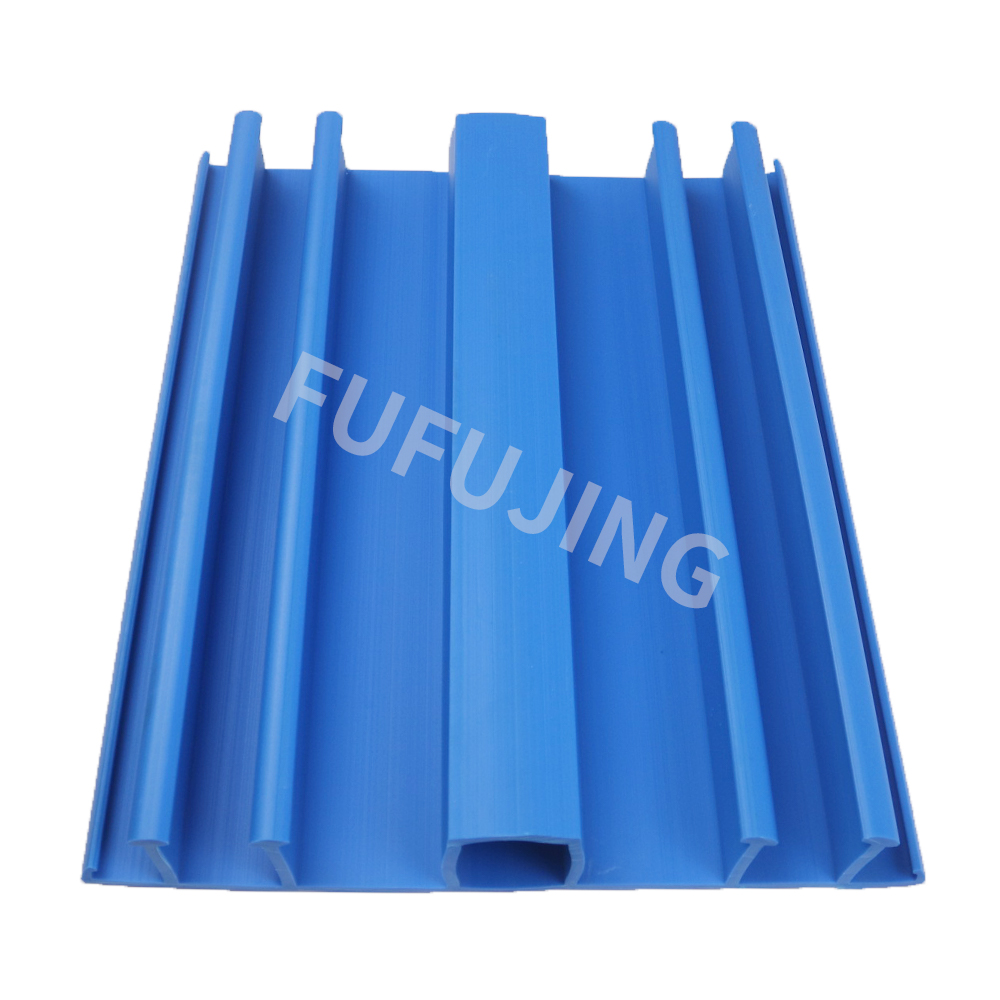
When choosing PVC waterstop, you need to consider factors such as material properties, engineering requirements, installation environment, etc. The following is a detailed purchase guide based on search results:
1. Clarify material properties and advantages
PVC waterstop is made of polyvinyl chloride as the main raw material and has the following characteristics:
Chemical corrosion resistance: It has strong resistance to chemical substances such as acids and alkalis, and is suitable for environments such as industrial wastewater and chemical fluids.
Low temperature performance: It performs well in low temperature environments and is suitable for cold areas or low temperature application scenarios.
Convenient construction: It can achieve seamless sealing through welding (such as hot melt or cold glue connection) and is easy to process on site.
Economical efficiency: It is usually cheaper than rubber waterstop.
2. Choose the type according to engineering requirements
PVC waterstop is divided into the following according to the installation method:
Internal waterstop: It is embedded in the concrete structure joint (such as deformation joint expansion joint), and the symmetrical design adapts to the expansion and contraction of concrete, with strong waterproof effect.
External waterstop: It is used on the outside of the construction joint, with one side flat and fitting the joint, and the other side with a concave and convex design to enhance the sealing. Note: The specific type (such as CB/CP or EB/EP) needs to be selected according to the joint structure.
3. Key performance indicators
Size and pressure resistance: Select thickness and width according to water pressure and deformation. For example:
When the water pressure is less than 4m, the thickness is ≥5mm and the width is ≥200mm;
When the water pressure is 4-8m, the thickness is ≥6mm and the width is ≥300mm.
Flexibility and impact resistance: Need to adapt to structural deformation and avoid cracking.
Environmental protection standards: Prioritize products that meet national or international certifications (such as the Ten-Ring Certification NSF, etc.) to ensure that no harmful substances are added.
4. Installation environment adaptation
Temperature range: The temperature resistance of PVC waterstop is usually 0~50℃. If higher temperature resistance is required (such as hot spring pipes), CPVC material (temperature resistance 0~90℃) can be considered.
Weather resistance: When exposed to ultraviolet rays or harsh climates for a long time, choose products containing antioxidants and ultraviolet absorbers.
5. Brand and quality verification
Reputable brand: Choose suppliers with industry certification (such as ISO standards for Type B enterprises), such as Jiapeng Plastics, to ensure material stability and after-sales service.
Appearance inspection: The surface should be flat without bubbles and cracks, and the packaging logo should be clear (including production date specifications, etc.).
6. Comparison with rubber waterstop
If the project requires higher flexibility (such as irregular joints), rubber waterstop may be more suitable; if chemical resistance and low cost are sought, PVC is better.
Summary steps
Determine the purpose: clarify the project type (such as basement tunnel) and environment (water pressure chemical exposure).
Selection: Select internal/external waterstop according to the joint location and match the size.
Verify performance: Check whether parameters such as pressure resistance and temperature resistance meet the standards.
Quality control: Give priority to certified brands and inspect appearance and workmanship on site.