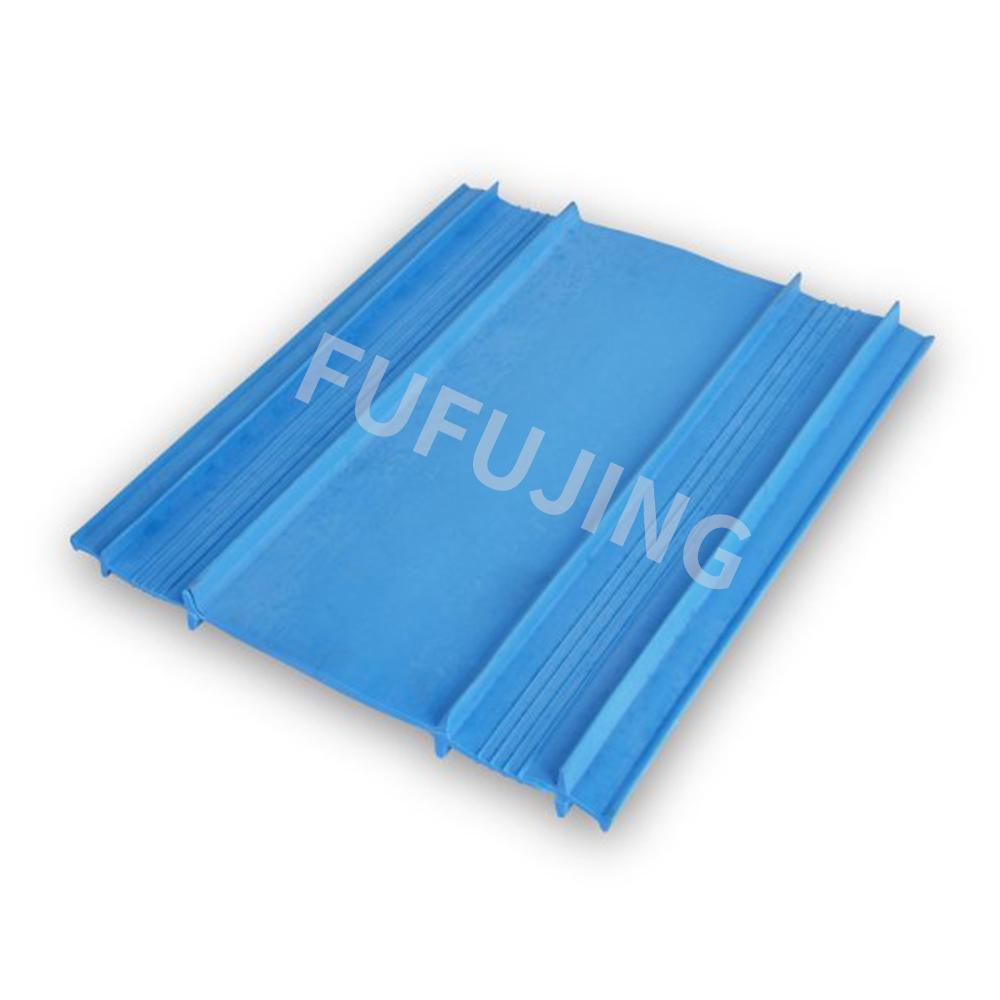
The installation of PVC waterstop is a key link in waterproofing the joints of concrete structures. It is necessary to ensure that its position is accurate, the connection is firm and it is fully integrated with the concrete. The following are the installation steps and precautions based on multiple professional materials:
1. Preparation before installation
Material inspection
Confirm that the PVC waterstop is not damaged or deformed, and is made of virgin resin (in accordance with the standards of the US Army Engineer Association CRD-C 572-74).
Prepare auxiliary materials: glass glue, PVC glue (for joint sealing), expansion tube, stainless steel screws, etc.
Positioning and line drawing
Draw ink lines at the concrete joint position to ensure that the center line is aligned with the center of the joint, and the allowable deviation is adjusted according to the size of the waterstop.
2. Installation steps
Fix the waterstop
Split mold construction: For rib-shaped or dumbbell-shaped waterstops, split templates must be used for fixing. Pre-embed half of the waterstop in the first pouring of concrete, and leave the other half for the second pouring.
Anchoring method:
Use wire to tie to the steel bar through pre-drilled holes or factory-made metal rings (spacing 30cm) to prevent displacement during pouring.
It is forbidden to directly nail through the waterstop body to avoid damaging the waterproof performance.
Joint treatment
Hot-melt welding: Applicable to PVC waterstops of the same material, temperature and pressure must be controlled to ensure that there are no bubbles in the weld.
Adhesive connection: Use special PVC adhesive, apply evenly and quickly dock, maintain pressure for 2-3 minutes to cure.
Connect with rubber waterstop: Use bolt bolting method, overlap length ≥35cm, and strengthen with sealant.
Concrete pouring
Fully vibrate during pouring to avoid damage to the waterstop by sharp corners of aggregates, and ensure that the interface with concrete is dense and without hollows.
Avoid setting construction joints within 50cm above and below the horizontal waterstop.
3. Key points
Environmental adaptability
Arctic-grade PVC waterstops must be used in low temperature environments (such as -50℃), and ordinary PVC may become brittle.
Chemical exposure environments (such as sewage treatment plants) require verification of the corrosion resistance of materials.
Quality control
After installation, check whether the waterstop is straight and free of distortion, and whether the joints have no leakage risks.
The split formwork needs to fit the waterstop tightly to prevent the concrete slurry from leaking and causing honeycomb phenomenon.
Special joint treatment
Expansion joints/settlement joints: Choose dumbbell-shaped or ribbed waterstops to accommodate displacement.
Post-casting strips: The waterstops need to be buried in advance, and all sealing processes must be completed before backfilling.
4. Common errors and avoidance
Error: The waterstop is folded or offset. Solution: Strengthen the anchor spacing (≤30cm), and recheck the position after splitting and fixing.
Error: The joint is not sealed tightly. Solution: Apply the socket adhesive first during winter construction to extend the curing time.
The above steps can ensure that the PVC waterstop forms a continuous waterproof barrier in the concrete joints. The specific project needs to be adjusted in combination with the design drawings and site conditions. In case of complex nodes (such as corners or cross joints), it is recommended to refer to the manufacturer's guide (such as Sika's installation manual) or consult professional technicians.