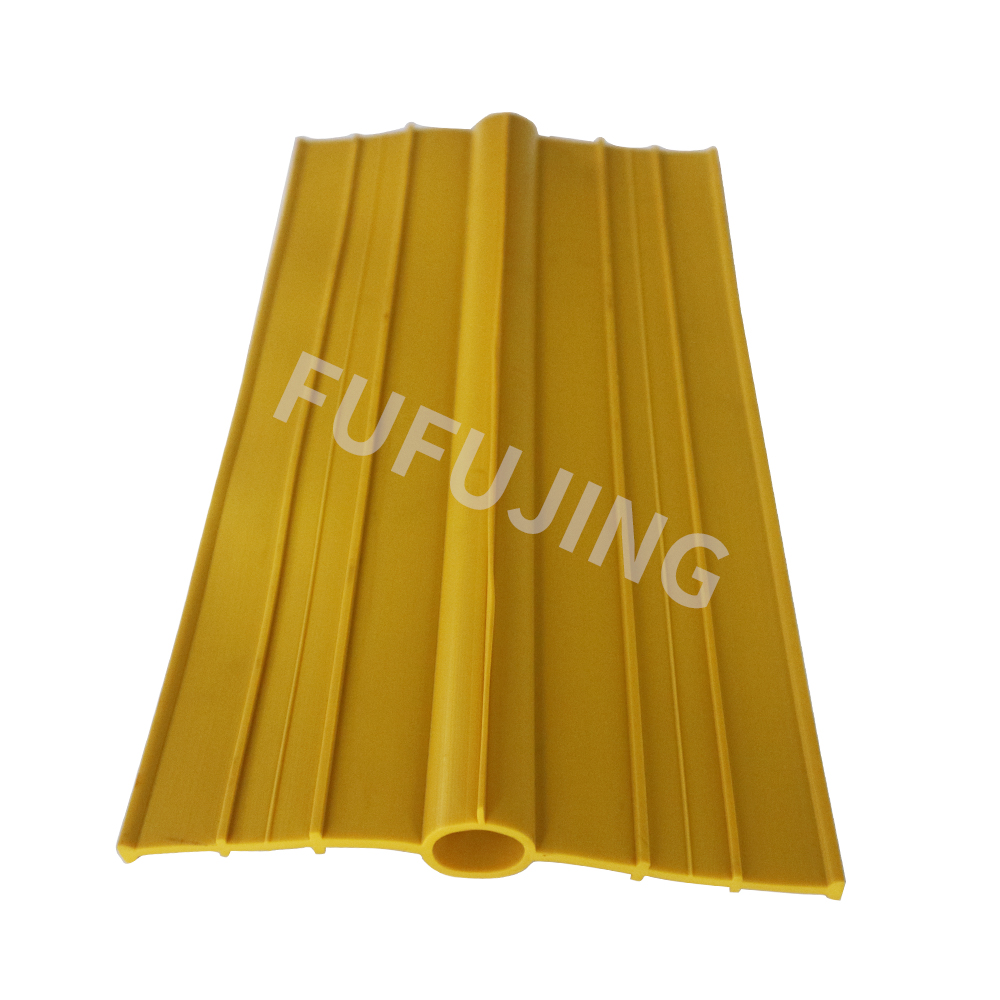
Maintenance of PVC waterstop is the key to ensure its long-term waterproof performance, which needs to be combined with daily maintenance, environmental protection and regular inspection. The following is a detailed maintenance guide based on search results:
1. Daily cleaning and maintenance
Timely cleaning of dirt
After use, the dirt and debris on the surface of the waterstop must be removed immediately to avoid long-term accumulation and corrosion or physical damage. Although the soil is weakly corrosive, long-term adhesion will shorten the service life.
When cleaning, it can be rinsed with a soft cloth or clean water, and avoid scratching with sharp tools to prevent surface damage.
Keep dry
After cleaning, it needs to be thoroughly dried to avoid residual moisture to breed mold or accelerate aging. A humid environment can easily cause material performance to deteriorate.
2. Storage and environmental protection
Avoid extreme environments
Temperature control: The storage temperature is recommended to be between 0 and 30°C to avoid deformation caused by high temperature (such as direct sunlight) or brittle cracking caused by low temperature (below -30°C).
Chemical contact: Stay away from corrosive substances such as oil, acid and alkali. Although PVC is corrosion-resistant, long-term contact with strong chemicals may affect performance.
Correct storage method
It should be placed flat in a dry and ventilated place to avoid permanent deformation caused by folding or heavy pressure. If it needs to be curled for storage, the radius should not be too small (recommended ≥30cm).
3. Regular inspection and repair
Inspection content
Surface condition: Check whether there are cracks, holes or loose joints, especially pay attention to the construction joints and expansion joints.
Sealing test: Perform water pressure test on key parts (such as basement pools) to confirm that there is no leakage.
Repair method
Small area damage: Use PVC patch hot melt repair, heat until the surface of the material melts and compact it, and check the sealing after cooling.
Joint problem: If the adhesive part is cracked, clean the old glue and re-apply special PVC glue (such as the adhesive recommended by Nan Ya Plastics).
Large area damage: It is recommended to replace the entire section of the waterstop to ensure the overall waterproof continuity.
4. Maintenance focus after construction
Protection after concrete pouring
Avoid drilling or cutting operations near the waterstop to prevent mechanical damage.
If subsequent construction is required, a protective layer (such as wood or rubber pad) should be covered on the surface of the waterstop.
Long-term monitoring
For key structures such as underground projects or dams, it is recommended to conduct professional inspections every 1 to 2 years to evaluate the aging of the waterstop.
Five lifespan and replacement recommendations
Normal lifespan: High-quality PVC waterstops can be used for 5 to 8 years without external damage, and may be shortened to 3 to 5 years when exposed to harsh environments (such as high water pressure chemical corrosion).
Replacement standard: When obvious hardening deformation occurs or multiple repairs are ineffective, it needs to be replaced in time.
The above measures can significantly extend the service life of PVC waterstops and maintain their waterproof effect. The specific maintenance plan needs to be adjusted according to the project environment, such as strengthening low-temperature protection in cold areas and increasing the frequency of corrosion resistance inspections in chemical projects.