

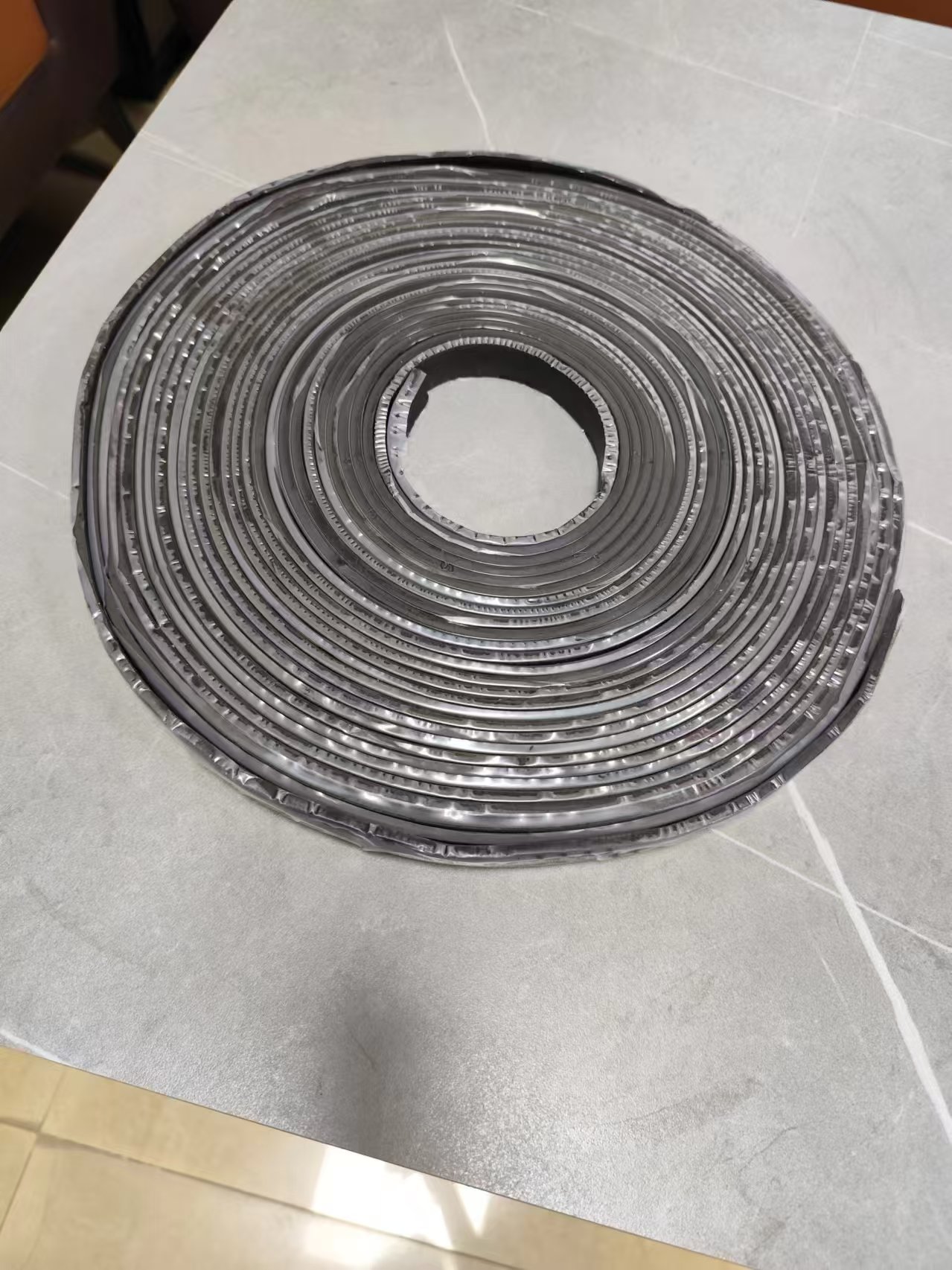
The core technology of expandable waterstops lies in their ability to expand upon contact with water. Through innovative materials science, they achieve a dynamic sealing mechanism: "water stops water." Traditional rubber waterstops rely on physical compression to form a seal, which can easily fail under joint displacement or prolonged water pressure. Expandable waterstops, however, utilize a composite water-absorbing and expanding agent and a highly elastic base material. Upon contact with water, their volume expands several times, forming a highly elastic colloid that fills the gaps in the joint. This property enables them to adapt to joint deformation, maintaining a continuous waterproofing effect despite temperature fluctuations, structural settlement, or vibration, thus overcoming the technical limitations of static sealing.

Technical Advantages
1. Dynamic Adaptability: The material's internal microporous structure allows it to rapidly absorb water and expand upon contact with water, compensating for joint displacement and adapting to deformation requirements in various engineering scenarios.
2. Improved Durability: The material maintains a stable elastic modulus in extreme temperatures and corrosive environments, significantly outperforming traditional materials in terms of permeability resistance.
3. Optimizing Construction Efficiency: Simplifying the installation process, reducing reliance on specialized skills, and lowering ongoing maintenance costs.
Application Scenario: Comprehensive Coverage and Deepening
The technical characteristics of expandable waterstops make them the preferred waterproofing solution for underground projects, bridges and tunnels, and water conservancy facilities. They are also gradually penetrating into emerging applications such as civil construction, new energy, and environmental protection projects.
Core Application Areas
1. Underground Projects:
Metro tunnels and utility corridors utilize embedded or externally applied waterstops at segment joints and expansion joints to withstand the vibrations and long-term water pressure of shield construction. Post-cast joints and through-wall pipe joints utilize a composite material and roll material system to create a multi-layered protection system.
2. Bridges and Tunnels:
Modular rubber waterstops are used in bridge expansion joints to accommodate thermal deformation and vehicle load impact.
Water-expandable waterstop strips are used at tunnel connection joints to fill micro-cracks and resist groundwater erosion.
3. Water Conservancy Facilities:
Corrugated or steel-edged waterstops are used in dam concrete joints and spillway floor joints to accommodate uneven settlement and high-velocity water flow. Acid- and alkali-resistant materials are used at the inlets and outlets of water transfer tunnels to extend service life and reduce the risk of leakage.
4. Emerging Sectors:
Radiation-resistant liquid waterstops are used in the joints of nuclear power plant containment vessels to meet sealing requirements in extreme environments. In photovoltaic roof waterproofing projects, materials are combined with photovoltaic modules to improve building energy efficiency and waterproofing performance. In urban flood control, materials are deeply integrated with drainage systems to build resilient urban infrastructure.
5. Market Outlook: Growth Driven by Policy and Technological Innovation
The global rubber waterstop market continues to grow in demand, benefiting from accelerated urbanization, increased infrastructure investment, and upgraded waterproofing standards. As a major consumer, China is further unleashing market potential driven by policies such as the 14th Five-Year Plan and the "Sponge City" initiative.
Future Trends: Intelligence, Greening, and Scenario Innovation
Intelligent Integration: Water-expandable waterstops are integrated with IoT technology to enable real-time leakage monitoring, data transmission, and intelligent early warning. Digital twin technology is applied to material performance simulation and project life prediction, optimizing design parameters and maintenance strategies.
Green and Sustainable: Developing biodegradable expansion agents and recycled rubber substrates to reduce the long-term environmental impact of materials. Promoting low-energy production processes and recycling models to reduce carbon emissions across the entire supply chain.
Scenario Innovation: Developing specialized waterstops for extreme environments (such as extreme cold, strong radiation, and high salt spray) expands their application. In urban renewal and existing building renovation, combining materials with minimally invasive repair techniques improves renovation efficiency and affordability.
Expandable waterstops are redefining building waterproofing standards through technological innovation. Their dynamic waterproofing mechanism, full-scenario adaptability, and intelligent potential not only address the shortcomings of traditional technologies but also provide foundational material support for smart city development and sustainable development.
With the refinement of technical standards and the expansion of application scenarios, this waterproofing revolution, which began with expansion joints, will undoubtedly drive the evolution of infrastructure towards higher quality, longer lifespan, and greater intelligence.